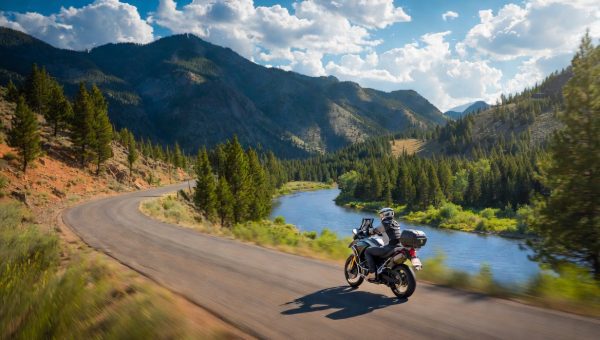
North Idaho is motorcycle country. From the twisting canyon roads along the Clearwater and Salmon Rivers to the forested passes above Coeur d’Alene, our region offers some of the most spectacular riding in the Pacific Northwest. It also presents some of the most serious hazards for riders — narrow lanes, blind corners, steep drop-offs, gravel on pavement, and drivers who simply don’t see motorcycles until it’s too late.
If you’ve been injured in a motorcycle accident on North Idaho’s roads, Goicoechea Law, LLC is here to help. This article covers some of the most dangerous road conditions riders face in our region, the most common causes of motorcycle crashes, and what to do to protect your legal rights after an accident.
The Roads That Make North Idaho Beautiful Also Make It Dangerous
Narrow, Winding Roads With Little Margin for Error
The same geography that draws riders to North Idaho — steep terrain, river canyons, dense forest — also creates road conditions that punish mistakes severely. Many of our most popular riding routes were built decades ago along terrain that left little room for wide lanes, generous shoulders, or forgiving guardrails. A driver who drifts even slightly across the centerline on a mountain road can cross directly into a motorcycle’s path with no warning and no room to recover.
Highway 12 along the Clearwater River, Highway 14 up the South Fork, the roads above the Lewiston Hill, and the mountain passes of the Idaho Panhandle are all beloved by riders — and all demand constant attention from everyone on the road. When other drivers fail to give that attention, riders pay the price.
North Idaho Roads Where Motorcycle Accidents Commonly Occur
Summer Hazards Specific to North Idaho
It’s Not Just Other Drivers
While driver negligence is the leading cause of serious motorcycle accidents, North Idaho’s summer riding season brings a range of road hazards that can catch even experienced riders off guard.
- Gravel and loose debris on pavement. Road shoulders in mountain terrain collect gravel, sand, and rock debris that washes onto driving lanes. On a curve, gravel under a motorcycle’s tires can cause an instant loss of traction with no warning.
- Frost heaves and pavement cracking. Idaho’s freeze-thaw cycles leave pavement buckled and cracked in ways that are nearly invisible to car drivers but can throw a motorcycle wheel violently off line.
- Deer and wildlife crossings. Summer evenings on canyon and forest roads bring deer and other animals into traffic. A collision with a deer at speed is often fatal for a rider.
- Logging and agricultural truck traffic. Wide loads, slow-moving equipment, and log trucks on narrow roads create dangerous passing situations and can push riders toward road edges and drop-offs.
- Tourists and unfamiliar drivers. Summer brings visitors who are unfamiliar with mountain road etiquette — drivers who stop abruptly for views, drift across centerlines on curves, or fail to check mirrors before pulling over.
- Construction zones. Summer road construction on Idaho highways creates abrupt lane narrowings, uneven pavement transitions, and driver distraction that disproportionately affects motorcycles.
Motorcyclists are about much more likely to die in a crash than occupants of passenger vehicles. When something goes wrong on a North Idaho mountain road, the consequences for a rider are almost always more severe than for anyone else involved.
The Most Common Causes of Serious Motorcycle Accidents
Driver Negligence Is the Leading Factor
In multi-vehicle motorcycle crashes, the other driver is at fault in the majority of cases. The most common scenarios we see in North Idaho motorcycle accident cases include:
- Left-turn collisions. A vehicle turns left across a motorcycle’s path at an intersection or driveway. The driver simply did not see the rider, or misjudged the motorcycle’s speed. This is the single most common serious motorcycle accident scenario.
- Failure to yield. A vehicle pulls out from a side road, driveway, or parking area into a motorcycle’s path without yielding the right of way.
- Rear-end collisions. A distracted driver fails to slow in time and strikes a motorcycle from behind — particularly dangerous at intersections and in construction zones.
- Unsafe lane changes. A driver changes lanes without checking blind spots, merging directly into a motorcycle riding legally in the adjacent lane.
- Drunk and impaired driving. Impaired drivers are more likely to cross centerlines, fail to maintain lane, and miss motorcycles entirely.
- Distracted driving. Phone use, navigation, and in-vehicle distractions cause drivers to look away from the road at critical moments.
Don’t Let the Insurance Company Blame You
Bias Against Riders Is Real
Insurance adjusters routinely attempt to shift blame onto motorcycle riders — citing speed, lane position, lack of visibility, or the rider’s choice to ride a motorcycle at all. Idaho’s comparative fault law means that even if you were partially at fault for the accident, you may still recover damages — but the insurer’s effort to assign you a high percentage of fault can significantly reduce your recovery.
Do not give a recorded statement to the other driver’s insurance company without speaking to an attorney first. Adjusters are trained to ask questions that produce answers favorable to the insurer. What you say in a recorded statement can be used to reduce or deny your claim.
What Compensation May Be Available After a Motorcycle Accident
A serious motorcycle accident can result in injuries that require months or years of medical treatment and permanently affect your ability to work and enjoy your life. Compensation available in an Idaho motorcycle accident case may include:
- Medical expenses — emergency care, hospitalization, surgery, rehabilitation, and future medical costs related to your injuries.
- Lost wages — income you were unable to earn while recovering from your injuries.
- Reduced earning capacity — if your injuries permanently affect your ability to work at the same level as before the accident.
- Pain and suffering — compensation for the physical pain and emotional distress caused by the accident and your injuries.
- Loss of enjoyment of life — if your injuries have prevented you from activities and experiences that were important to you before the accident.
- Permanent disability or disfigurement — additional compensation for lasting physical consequences of your injuries.
- Motorcycle repair or replacement — property damage to your bike.
If a family member was killed in a motorcycle accident caused by another driver’s negligence, Idaho’s wrongful death statutes may allow surviving family members to recover damages for their loss. Contact us to discuss your situation.
What to Do After a Motorcycle Accident in North Idaho
- Call 911 immediately — get law enforcement to the scene and document the accident in a police report.
- Get medical attention right away, even if you feel relatively okay — adrenaline can mask serious injuries in the immediate aftermath of a crash.
- If you are able, photograph the scene — road conditions, vehicle positions, skid marks, gravel or debris, and your injuries.
- Get the names, contact information, and insurance details of all other drivers involved.
- Get names and contact information of any witnesses.
- Do not move your motorcycle or other vehicles until law enforcement has documented the scene if possible.
- Do not speak with the other driver’s insurance company or give a recorded statement before consulting with an attorney.
- Do not accept any settlement offer from an insurance company before understanding the full extent of your injuries and your legal rights.
Serving Injured Riders Across North Idaho
Goicoechea Law, LLC represents motorcycle accident victims throughout North Idaho and the LC Valley. We handle these cases on a contingency fee basis — no upfront costs and no attorney fees unless we recover compensation for you.
Communities We Serve
Injured in a motorcycle accident on a North Idaho road?
Contact Goicoechea Law, LLC for a Free Case Review.
Call 208.743.2313This article is for general informational purposes only and does not constitute legal advice. Reading this article does not create an attorney-client relationship with Goicoechea Law, LLC. The statistic referenced regarding motorcycle fatality rates is drawn from National Highway Traffic Safety Administration data and is provided for general informational context only. If you have been injured in a motorcycle accident, you should consult with a qualified Idaho personal injury attorney about the specific facts of your situation.