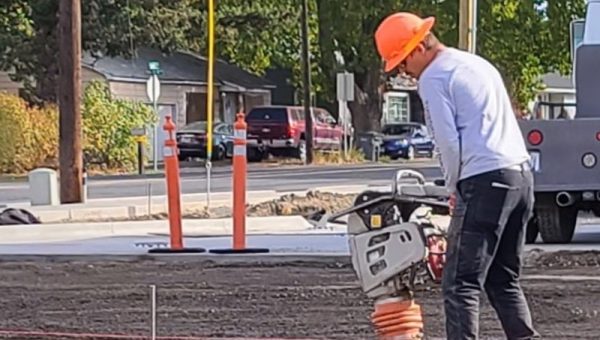
Construction is one of the most dangerous industries in Idaho. Falls, equipment accidents, crushing injuries, and heat-related illness send construction workers to the hospital every day across the state. If you were injured on a job site, Idaho workers’ compensation covers you — and the decisions you make in the days after your injury can affect your benefits for years.
At Goicoechea Law, LLC, we represent injured construction workers throughout North Idaho and the LC Valley, including Lewiston, Moscow, Coeur d’Alene, Post Falls, Hayden, and the surrounding communities. This article explains what you need to know about construction work injuries under Idaho law.
Why Construction Injuries Are Different
Higher Stakes, More Complex Claims
Construction injuries tend to be more severe than injuries in many other industries. Falls from scaffolding, rooftop work, and ladders can cause spinal cord injuries, traumatic brain injuries, and fractures that permanently alter a worker’s life. Equipment accidents and struck-by incidents can be catastrophic. The stakes in construction workers’ compensation claims are accordingly high — which means insurance companies fight these cases harder.
Construction claims also involve legal complexities that other work injury claims don’t. Multiple contractors, subcontractors, and property owners may be involved on any given job site. Equipment manufacturers and rental companies may bear responsibility for defective machinery. In some cases, an injured construction worker has both a workers’ compensation claim and a separate personal injury claim arising from the same accident.
The pressure to get back on the job site fast is real. But returning too soon, or accepting a settlement before you understand your full injuries, can cost you significantly in the long run.
The Most Common Construction Injuries We Handle
- Falls from scaffolding, rooftops, ladders, and elevated work platforms — the leading cause of fatal construction injuries nationally.
- Struck-by incidents — being hit by falling materials, swinging equipment, or vehicles on or near the job site.
- Caught-in and caught-between accidents — injuries from machinery, equipment, and collapsing structures.
- Trench collapses and excavation accidents — which can cause crush injuries, suffocation, and death.
- Electrical accidents — contact with power lines, exposed wiring, and inadequate lockout/tagout procedures.
- Heat exhaustion and heat stroke — particularly during Idaho’s summer construction season when outdoor temperatures rise.
- Repetitive stress and overexertion injuries — cumulative injuries from physical labor that develop over time.
- Power tool and machinery injuries — lacerations, amputations, and crush injuries from hand and power tools.
Your Rights Under Idaho Workers’ Compensation Law
Full Coverage Regardless of Fault
Idaho’s workers’ compensation system is a no-fault system. That means you are entitled to benefits whether or not you were partly responsible for the accident that injured you. You do not need to prove your employer was negligent. You simply need to show that your injury arose out of and in the course of your employment.
Workers’ compensation benefits available to injured construction workers in Idaho include:
- Medical benefits — coverage for all reasonable and necessary medical treatment related to your work injury, including emergency care, surgery, hospitalization, physical therapy, and prescription medication.
- Temporary Total Disability (TTD) — wage replacement of approximately two-thirds of your average weekly wage while you are completely unable to work, subject to Idaho’s annual maximums.
- Temporary Partial Disability (TPD) — partial wage replacement if you return to light duty work at reduced earnings.
- Permanent Partial Impairment (PPI) — disability compensation for lasting physical injury to your body, based on an impairment rating assigned by a physician.
- Permanent disability benefits — additional compensation if your injury affects your long-term ability to work, taking into account your age, education, and work history.
Third-Party Claims — When Workers’ Comp Isn’t Your Only Option
Two Claims From One Accident
Idaho workers’ compensation generally limits your ability to sue your employer directly. But when a third party — someone other than your employer — caused or contributed to your construction injury, you may be able to bring a separate personal injury claim in addition to your workers’ compensation claim.
Common third-party situations on construction sites include:
- A subcontractor or another contractor’s employee whose negligence caused your injury.
- An equipment manufacturer whose defective product failed and caused the accident.
- A property owner whose unsafe conditions contributed to the incident.
- A driver who struck you while you were working on or near a road construction site.
A personal injury claim allows you to recover damages beyond what workers’ compensation provides — including pain and suffering, which workers’ comp does not cover. If you were seriously injured on a construction site, it is worth discussing whether a third-party claim is available in your case.
Serving Construction Workers Across North Idaho and the LC Valley
Construction activity in our region spans residential and commercial development, road and infrastructure projects, renovation work, and large industrial projects. Our clients have been injured on job sites throughout the area — from high-rise projects in Coeur d’Alene to road construction along Highway 12, residential builds in Post Falls and Hayden, and commercial development projects in the Lewiston Valley.
Communities We Serve
What to Do After a Construction Site Injury
Act quickly. The steps you take immediately after a construction injury can significantly affect your workers’ compensation claim. Delays in reporting and gaps in medical treatment are among the most common reasons insurers use to deny or minimize benefits.
- Report your injury to your supervisor or employer immediately — do not wait. Idaho law requires timely reporting, and delays give insurers grounds to question your claim.
- Get medical care right away. Tell the treating physician exactly how the accident happened, what body parts were injured, and every symptom you are experiencing — even those that seem minor.
- Ask your employer to file a Notice of Injury with the Idaho Industrial Commission.
- Document the scene if you are able — photographs of the hazard, the equipment, and your injuries can be critical evidence.
- Get the names and contact information of any witnesses.
- Do not give a recorded statement to the insurance company or sign any documents before consulting with an attorney.
If a third party may be responsible for your injury — a subcontractor, equipment manufacturer, or property owner — it is especially important to contact an attorney quickly. Evidence at construction sites disappears fast, and the window to preserve it is narrow.
Why Experience Before the Idaho Industrial Commission Matters
Not every attorney who handles workers’ compensation cases has experience arguing before the Idaho Industrial Commission. Construction injury cases involving serious or permanent injuries frequently end up at hearing — where a Referee evaluates the evidence, hears testimony from medical experts, and issues a binding written decision. The insurer will have experienced attorneys at that hearing. You should too.
Goicoechea Law, LLC has represented injured workers before the Idaho Industrial Commission for over 20 years. We have argued construction injury cases involving falls, equipment accidents, and third-party claims, and we have taken cases to the Idaho Supreme Court on behalf of injured Idaho workers.
We handle construction injury cases on a contingency fee basis. There are no upfront costs and no attorney fees unless we recover benefits or compensation for you.
Injured on a construction site in Lewiston, Moscow, Coeur d’Alene, Post Falls, or anywhere in Idaho?
Contact Goicoechea Law, LLC for a Free Case Review.
Call 208.743.2313This article is for general informational purposes only and does not constitute legal advice. Reading this article does not create an attorney-client relationship with Goicoechea Law, LLC. If you have been injured at work, you should consult with a qualified Idaho workers’ compensation attorney about the specific facts of your situation.